

Baseball is America’s pastime for a reason. It remains the one sport kids play from a young age and remain active in through high school in many cases. There are more than 5,500 Little League programs across the U.S., with millions of players in each. It’s hard to find a high school without a baseball team. This sport is still the epitome of Americana, and it’s the reason we still watch on the edge of our seats.
On top of the youth involvement, there are more than 100 minor league teams, giving communities from Lawrenceville, Georgia, to Scranton, Pennsylvania; to Round Rock, Texas; to Biloxi, Mississippi; to Spokane, Washington a sense of engagement in the sport. This is truly the most regional of the four major sports, and that’s because the sport goes out of its way to make the sport successful in that way.
Looking at the baseball legacies of each state is a fun exercise. You’d be surprised who the all-time greats are coming from each of the 50 states in the United States of America.
Our methodology for this is simple: a player must be born in the state to count. If they grew up elsewhere, went to high school in another state, etc. that doesn't count. Place of birth is the determining factor. As for how we came up with the list, it's a mixture of total career performance, superstar peak, playoff contributor, and impact on the league in general. It's not a simple WAR calculation, but it's more concerning the value this person brought to the game of baseball on the field only. We also lean more towards a peak that was MVP level over a long stretch of decent seasons. With that, let's jump into Alabama!
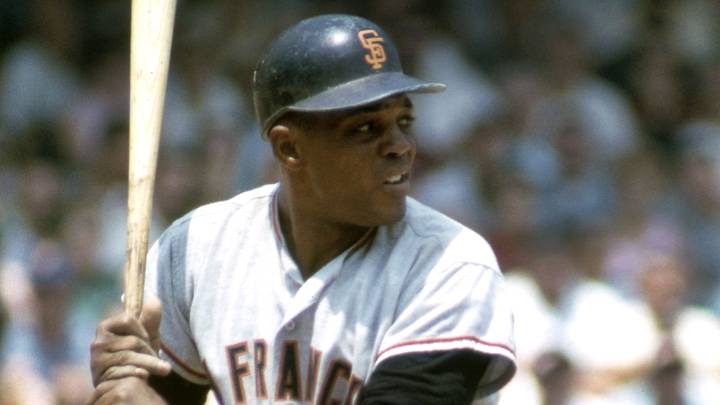
Alabama: Willie Mays
- Teams: New York Giants (1951–57), San Francisco Giants (1958–72), New York Mets (1972–73)
It's fitting that we're starting this list with Willie Mays. Many would put Mays at the top of the list for greatest baseball players of all time. And what's crazy is this is one of the hardest decisions. Mays is a slam dunk, but it forces us to leave Hank Aaron off the list. No player in baseball history combined hitting, power, speed, and defense at his level. Born in Westfield, Alabama, Mays became a 24-time All-Star, two-time National League MVP, and 12-time Gold Glove winner while finishing his career with 660 home runs, 3,293 hits, and 339 stolen bases. Hank Aaron, who was born in Mobile, accumulated 755 home runs, 3,771 hits and 25 All-Star selections. Mays gets the nod because of the extraordinary breadth of his game and the fact that his combination of offensive production and elite center-field defense is virtually unmatched. Kids are still practicing the Mays catch more than 50 years later.
Alaska: Curt Schilling
- Teams: Baltimore Orioles (1988–90), Houston Astros (1991), Philadelphia Phillies (1992–2000), Arizona Diamondbacks (2000–03), Boston Red Sox (2004–07)
The Curt Schilling of today is not the one we thought about during his career. The partnership with Randy Johnson in Arizona, the Bloody Sock in Boston, and his continued success late into his career have led to a superstar career, and there’s nobody really close to him who was born in Alaska. Schilling was born in Anchorage, Alaska’s most populed city. Surprisingly, the fact he was from Alaska wasn’t brought up much, but he did spend high school in Arizona, which was discussed when he played for the Diamondbacks.
Arizona: Cody Bellinger
- Teams: Los Angeles Dodgers (2017–22), Chicago Cubs (2023–24), New York Yankees (2025–26)
Born in Scottsdale, Cody Bellinger gets the Arizona selection because of his peak performance and postseason success. Bellinger immediately established himself as a star with the Los Angeles Dodgers, winning National League Rookie of the Year in 2017 and the NL MVP Award in 2019. Bellinger's Arizona connection is also strengthened by his development in the state's baseball system before becoming one of the game's stars. His most relevant competition includes Ian Kinsler, but let’s be serious. Bellinger is at MVP-level when he’s at his best. Kinsler was a great second baseman at his best.
Arkansas: Brooks Robinson
- Teams: Baltimore Orioles (1955–77)
From Little Rock to a career in Baltimore that lasted 23 years, Brooks Robinson is one of the all-time greats in this game. He won 16 consecutive Gold Glove Awards and was an easy choice for the Hall of Fame in 1983. He finished with 2,848 hits, 268 home runs and 1,357 RBI, while becoming so synonymous with defensive excellence that he earned the nickname "The Human Vacuum Cleaner." Ironic since Priscilla the Fastidious Pig, you know the pig that used to use its own vacuum back in the 1950s, was also from Arkansas. Robinson’s competition among Arkansas-born players includes a few interesting names, but none possesses Robinson's combination of defensive dominance, offensive production, and championship credentials.
California: Barry Bonds
- Teams: Pittsburgh Pirates (1986–92), San Francisco Giants (1993–2007)
California is stacked with baseball royalty. Ted Williams, Joe DiMaggio, Tom Seaver, and Tony Gwynn are just some of the names considered for this honor. But it’s Barry Bonds. His statistical résumé is simply the best ever. Bonds, who was born in Riverside while his father, future star Bobby Bonds, finished off his time at Riverside Polytechnic High School, became a seven-time MVP, eight-time Gold Glove winner, and the all-time career home run leader with 762. He also holds the single-season record with 73 home runs in 2001 and the single-season record for walks with 232. California's baseball résumé is extraordinarily deep, but Bonds stands at the top of it.
Colorado: Roy Halladay
- Teams: Toronto Blue Jays (1998–2009), Philadelphia Phillies (2010–13)
Roy Halladay feels like a guy who was born in Denver, right? He became one of the defining starting pitchers of his era, winning two Cy Young Awards and throwing 67 complete games (something that’s unheard of in today’s game), along with a no-hitter, a perfect game, and a postseason no-hitter in his illustrious career. This is just proof of his dominance. Halladay was the top pitcher for most of his peak, even if they let others win the top award. The Hall of Famer is beloved by both his franchises: the Philadelphia Phillies and Toronto Blue Jays. The Colorado-born competition is considerably thinner than in other states, which makes Halladay's selection relatively easy. His connection to Colorado continued from his childhood through his time at Arvada West High School, where Toronto selected him 17th overall in the 1995 draft.
Connecticut: Mo Vaughn
- Teams: Boston Red Sox (1991–98), Anaheim Angels (1999–2002), New York Mets (2002–03)
Many people today forget how great Mo Vaughn was at his peak. For those who only remember the low-quality at-bats he had with the New York Mets are not giving him credit for the massive bombs he hit when he was with the Boston Red Sox. Born in Norwalk, Vaughn won the 1995 American League MVP and became one of the most feared power hitters of the 1990s. He had three consecutive 30-homer, 100-RBI seasons that established him as a legitimate superstar during an era when dingers were the league’s best friend. It also helps that there isn’t a ton of competition in Connecticut to speak of, but getting a chance to talk about Vaughn is always a good time. He is a little lost in history because of the injuries that ended his dominance, but that peak was something else.
Delaware: Paul Goldschmidt
- Teams: Arizona Diamondbacks (2011–18), St. Louis Cardinals (2019–24), New York Yankees (2025–present)
The Paul Goldschmidt story is still somewhat ongoing, as he’s playing for the New York Yankees as of 2026, but when looking at his competition in the First State, there is no other choice. He had elite power that, combined with his development into one of baseball's premier first basemen, led to the 2022 National League MVP Award and multiple Gold Glove and Silver Slugger Awards. His competition from Delaware-born players is limited, which is why he, as an active player, can run away with this distinction. Not bad for a kid from Wilmington.
Florida: Chipper Jones
- Teams: Atlanta Braves (1993–2012)
As many might have guessed, there is some competition in Florida, but somewhat surprisingly, Chipper Jones is the choice. The Atlanta Braves long-time third baseman was born in DeLand, a city that sits between Orlando and Daytona Beach. It wasn’t hard to move a few hours north to Atlanta and spend his whole career there. Lost in history just a little bit, Jones became the premier position player on Atlanta's dominant teams of the 1990s and 2000s to pair with Greg Maddux, Tom Glavine, and John Smoltz on the mound. He helped the Braves reach the postseason 11 seasons in a row. He finished just short of some of the most important milestones, with 2,726 hits, 468 home runs, and 1,623 RBI. Still, he was elected to the Hall of Fame in 2018. On top of all of that, he was one of the best switch-hitters the game has ever seen.
Georgia: Ty Cobb
- Teams: Detroit Tigers (1905–26), Philadelphia Athletics (1927–28)
Georgia was one of the hardest states to choose, and we’re doing our best to choose this based solely on how this player was perceived on the field, not off of it, so Ty Cobb barely squeaks past other all-timers from the state. Cobb was born in the town of Narrows, a small farming community back in 1886. Nicknamed the “Georgia Peach,” Cobb would break dozens of MLB records, becoming one of the early star players in the history of the sport and the greatest Detroit Tiger of all time. Still considered one of the best pure hitters in the history of the sport, Cobb’s 12 batting titles is a record that will probably never be broken.
Hawaii: Sid Fernandez
- Teams: Los Angeles Dodgers (1983), New York Mets (1984–93), Baltimore Orioles (1994-1995), Philadelphia Phillies (1994), Houston Astros (1995–96)
We didn’t expect to have a lot to choose from in Hawaii; we’re not going to lie, but Sid Fernandez is a really fun surprise. He gets the nod because he was an unusually dominant left-handed pitcher for his era. The Honolulu product finished his career with 114 wins, 1,743 strikeouts, and a 3.36 ERA, spending his most productive years with the New York Mets. Charlie Hough had a longer career, pitching for 25 seasons, but he never had the dominant stretch Fernandez did in the mid-1980s. He even helped the Mets win a championship in 1986.
Idaho: Harmon Killebrew
- Teams: Washington Senators (1954–60), Minnesota Twins (1961–74), Kansas City Royals (1975)
One of the great forgotten legends of baseball lore, Harmon Killebrew is not forgotten in Idaho. Just this year, he was honored as part of the America 250 celebration in the town of Payette. Hitting 573 home runs in his career, Killebrew was never boisterous or overstated. He would just walk to the plate with his Minnesota Twins uniform on, and crush balls out of the park.. He won the 1969 American League MVP Award and led the AL in home runs six times. The competition among Idaho-born players is not particularly close, and Killebrew's Hall of Fame career is head and shoulders above everyone else. The fact that he’s still celebrated decades after the last time he hit a baseball shows how important his legacy is to Idaho.
Illinois: Rickey Henderson
- Teams: Oakland Athletics (1979–84, 1989–93, 1994–95, 1998), New York Yankees (1985–89), Toronto Blue Jays (1993), San Diego Padres (1996–97, 2001), Anaheim Angels (1997), New York Mets (1999), Seattle Mariners (2000), Boston Red Sox (2002), Los Angeles Dodgers (2003)
Many associate Rickey Henderson with Oakland, but he was born in the Windy City of Chicago. This sport’s Steph Curry, Rickey Henderson’s career fundamentally changed the way the game valued speed and baserunning. He finished with 3,055 hits, 2,295 runs, and a record 1,406 stolen bases, along with a .401 career on-base percentage. Many consider him the greatest leadoff hitter in the history of the sport. Illinois has produced numerous great players, including Ernie Banks, but Henderson's impact on the game gives him the edge.
Indiana: Don Mattingly
- Teams: New York Yankees (1982–95)
Just like his Hall of Fame candidacy, Don Mattingly is a controversial choice for Indiana. His peak with the New York Yankees made him one of the most complete first basemen in baseball. This just wasn’t those Yankees. This wasn’t the constant superstar team that couldn’t help but fall into a few World Series championships. These were the Yankees where George Steinbrenner was losing his grip. Still, Mattingly won the 1985 American League MVP Award, a batting title, six Gold Gloves and three Silver Sluggers during his career. He finished with 2,153 hits, a .307 batting average, 222 home runs and 1,099 RBI. It’s not the most riveting stat line, but his peak was stupendous. The Evansville-native’s biggest competition includes Hall of Famers Scott Rolen and Mordecai Brown. Despite his absence from Cooperstown, Mattingly is our choice.
Iowa: Cap Anson
- Teams: Philadelphia Athletics (1876), Chicago White Stockings (1876–89), Chicago Colts (1890–97)
If you build it, they will come. That saying is about as Iowa as baseball is America. Yet, this isn’t the most fluid state with superstars. Cap Anson is a great pick, however. He was baseball's first great superstar and one of the dominant players of the 19th century. Anson was once nicknamed “The Mashalltown Infant” (they weren’t as good at nicknames back then) after the town he called home. He played 27 seasons and hit over .300 in 24 of them, accumulating more than 3,000 hits. The Hall of Fame identifies him as one of the game's great modernizers and notes that he was the first player to reach 3,000 hits. His most relevant Iowa-born competition includes Bob Feller and Michael Wacha, so we’re not really going in any other direction here.
Kansas: Walter Johnson
- Teams: Washington Senators (1907–27)
Many still consider Walter Johnson the greatest pitcher to have ever lived. The Kansas native won 417 games, struck out 3,509 batters, and posted a 2.17 career ERA, while completing 531 games and throwing 110 shutouts. He originally gained the strikeout record in 1919, and that record stayed until 1983. That’s an astounding accomplishment for such a basic MLB statistic. His life started as most did back then in Kansas. He was working on a farm four miles west of Humboldt. Then, his parents moved around before he was discovered while playing in Idaho. From that to what Ty Cobb called “the most powerful arm ever turned loose in a ball park” is remarkable.
Kentucky: Pee Wee Reese
- Teams: Brooklyn Dodgers (1940–42, 1946–57), Los Angeles Dodgers (1958)
We’re really hitting those true middle-country states right now, but there are some interesting eras represented here. Pee Wee Reese was the captain of one of the most important teams in baseball history. Reese played 16 seasons with the Dodgers, making 10 All-Star Teams and winning two World Series titles. His greatest historical significance comes from his relationship with Jackie Robinson: Reese publicly supported Robinson during his first seasons with the Dodgers and became an important symbol of the resistance Robinson faced. Going from his Kentucky roots to the national spotlight in Brooklyn could be stark for some players, but Reese always played like he was there for a reason.
Louisiana: Mel Ott
- Teams: New York Giants (1926–47)
Mel Ott might be the most underrated 500-home-run hitter in the history of the league. He was a force with the New York Giants over his 22-year career, but he doesn’t get the same praise today as his colleagues. Well, he is the clear winner of the Louisiana baseball greats sweepstakes. Born in Gretna, Ott was an 11-time All-Star and led the league in home runs six times. His competition includes Vida Blue, Andy Pettitte, Ron Guidry, and Vernon Wells, but they are all a few tiers below Ott as a player. Ott also has an unusual historical distinction: he was one of the few stars of his era to skip the minor leagues entirely.
Maine: Bob Stanley
- Teams: Boston Red Sox (1977–89)
Maine is a hard one. Bob Stanley was durable and valuable, particularly in the unique role of a swingman and late-inning reliever. Portland’s son Stanley spent his entire career with the Boston Red Sox and accumulated more than 130 wins and more than 130 saves. His ability to work both as a starter and reliever made him unusually influential during a period when pitchers were used in a much more varied manner than they are today.
Maryland: Babe Ruth
- Teams: Boston Red Sox (1914–19), New York Yankees (1920–34), Boston Braves (1935)
Did you know that Babe Ruth was from Maryland? It just doesn’t seem correct, but the first all-time great and still incredibly popular Babe Ruth was born in Baltimore. Ruth revolutionized baseball with his home run power and American magnetism. He was a superhero in that he could eat a plate of hot dogs and then hit 50+ home runs whenever he wanted. He was one of the game’s first pitchmen, hocking products and setting the stage for today’s foray into sports advertising. Maryland has a pretty insane resume of athletes, between Cal Ripken Jr., Jimmie Foxx, Al Kaline, and Mark Teixeira, but Ruth is the defining star of this sport. We might not be making this list today if it wasn’t for Babe Ruth, and it all started in the city of Baltimore.
Massachusetts: Jeff Bagwell
- Teams: Houston Astros (1991–2005)
Massachusetts is not as strong as many would think, but it comes down to two superstar names who did very opposite things on the baseball field. This comes down to Concord’s Tom Glavine and Boston’s Jeff Bagwell. Bagwell barely takes this one because of a total package of power and defensive ability. Bagwell was actually a member of the Red Sox organization early in his career, but they traded him for relief pitcher Larry Anderson. Today, it’s considered one of the worst trades in baseball history. Bagwell hit 449 home runs, all for the Houston Astros, and Anderson was off the Red Sox in a year.
Michigan: Charlie Gehringer
- Teams: Detroit Tigers (1924–42)
Michigan is not the hotbed of baseball talent some might expect with the legacy of the Detroit Tigers being there forever. Derek Jeter has always been associated with Michigan, but he was born in New Jersey (more on that later). Charlie Gehringer is the choice here, but it’s not exactly a sexy one. Gehringer spent his entire major-league career with the Detroit Tigers, which admittedly helps his standing here, and became known as "The Mechanical Man" because of his remarkably steady production. An interesting statistic is that Gehringer played every inning of the first six All-Star Games as the American League's starting second baseman and hit .500 in those games. There are some stars who were born in Michigan, like Kirk Gibson and John Smoltz, but Gehringer's a Hall of Famer for a reason. His career with Detroit also makes him one of the strongest player-and-state connections on the entire list.
Minnesota: Paul Molitor
- Teams: Milwaukee Brewers (1978–92), Toronto Blue Jays (1993–95), Minnesota Twins (1996–98)
This is one of the easier choices on the list, partially because Minnesotans won’t accept any other choice. Paul Molitor had a unique combination of skills: elite hitting, smooth baserunning, positional versatility, and extraordinary longevity. Molitor was a “club” man, joining the 3,000-hit club (finishing with 3,319 hits), 500-stolen-base club (finishing with 504 stolen bases, and winning the 1993 World Series MVP in his first year with the Toronto Blue Jays. Dave Winfield, who was born in St. Paul as well, is the most significant challenger, but Molitor is the guy here. He even made the right move, signing with the Twins to end his career at home.
Mississippi: Dave Parker
- Teams: Pittsburgh Pirates (1973–83), Cincinnati Reds (1984–87), Oakland Athletics (1988), Milwaukee Brewers (1989), California Angels (1990), Toronto Blue Jays (1991)
Dave Parker had some GREAT years with the Pittsburgh Pirates, and he’s one of the few greats to break out in Major League Baseball. There are some Negro League legends, like Terry Wood, who came out of Mississippi, too. Parker had this incredible combination of skills that made him a superstar. He was a quintessential five-tool player, making him one of the most feared hitters of his era. He helped the Pirates become close to a dynasty alongside Willie Stargell. His overall career statistics are slightly muted because of the injuries Parker suffered late in his career (2,700 hits and 339 home runs), but that doesn’t take away from the legendary peak.
Missouri: Yogi Berra
- Teams: New York Yankees (1946–63), New York Mets (1965)
There are few players in the history of sports who are as recognizable as Yogi Berra. And honestly, all that attention has people forgetting how great he was. Many believe Berra is still the greatest catcher in the history of baseball. He holds a ridiculous 10 championship rings (Michael who? Tom who?). The St. Louis native won three American League MVP Awards and appeared in 18 All-Star Games. Now, this is actually one of the best competitions in this article, because Max Scherzer was also born in Missouri. Both have a history of dominance, and their peaks are unmatched. It’s honestly a coin flip between the two, and leaving either off makes this list feel incomplete, but there has to be a winner, and a decade of dominance is hard to match.
Montana: Dave McNally
- Teams: Baltimore Orioles (1962–74), Montreal Expos (1975)
There are some smaller states that surprised us with the talent that was available to choose from. That’s what we get with baseball being as old as it is and as popular as it was for most of the last 150 years. Montana did not surprise us. Dave McNally is Montana’s best player in the history of the state. He was a left-handed starter who played a major role on the Baltimore Orioles' championship teams of the 1960s and early 1970s. He won 184 games, made four All-Star teams and helped Baltimore win three World Series. That’s a strong resume! We’re not taking anything away from McNally. This is great for a player from Billings.
Nebraska: Bob Gibson
- Teams: St. Louis Cardinals (1959–75)
There are few players with whom the word “dominance” is more associated than Bob Gibson. He won two Cy Young Awards, the 1968 National League MVP Award and two World Series with the St. Louis Cardinals. Just look at that 1968 stat line: 1.12 ERA, 268 strikeouts, and 22 wins. There are decent players who have an 11 WAR in their careers. Gibson had an 11.2 WAR that season, and he followed it up with 10.4 WAR. Michael Wacha and Carlos Rodon have 23.0 WAR in their careers. Matt Cain, who was a Cy Young winner, had 29.2 in his career. Gibson had 30 WAR in three seasons.
Nevada: Bryce Harper
- Teams: Washington Nationals (2012–18), Philadelphia Phillies (2019–present)
Coming back-back-back to the modern era, Bryce Harper is one of baseball’s biggest stars today, continuing to build his legacy as the top player for the newest era of Philadelphia baseball. He’s a Home Run Derby winner, an NLCS MVP, a two-time National League MVP, and a nine-time All-Star with the Nationals and Phillies. He’s going to easily pass 400 home runs, and he has an outside shot at hitting 500 home runs before his career is over. This seems like a slam dunk for Cooperstown when the time comes. Starting from Vegas and finishing here ain’t bad.
New Hampshire: Chris Carpenter
- Teams: Toronto Blue Jays (1997–2002), St. Louis Cardinals (2004–12)
Chris Carpenter wasn’t flashy, but he didn’t need to be. The same can be said for New Hampshire. It’s reserved but amazing once you see what it’s really all about. Carpenter was the ace of a championship-winning St. Louis Cardinals team and, when we really look back at it, one of the best starting pitchers of his generation. Starting his life in Exeter, Carpenter won the 2005 American League Cy Young Award and later became the centerpiece of the Cardinals' rotation, helping them win the 2006 and 2011 World Series. He would later suffer his fair share of injuries, but he was great long enough to bring the Cardinals back to the dominance that once defined them.
New Jersey: Mike Trout
- Teams: Los Angeles Angels (2011–26)
This is THE debate of this list. Everyone is modern era, and everyone has a claim to the state of New Jersey. Derek Jeter versus Craig Biggio versus Mike Trout is just a fun conversation. Obviously, Trout is the only one who is still on the baseball field building his overall legacy, but he’s done enough to steal this one. Jeter has very impressive stats and led a dynasty to boot, but Trout was the best player in baseball for a sustained amount of time. He has three AL MVPs and 11 Silver Sluggers while playing elite center field for the Los Angeles Angels. Gosh, we hope they just let him play for a true contender one day because his playoff resume is not great, but that’s not his fault. This debate is very hard, because we have Mr. November versus a guy who’s barely seen October baseball. But, Trout takes it as the letter of the law is “best” baseball player, and he’s the better player overall.
New Mexico: Ralph Kiner
- Teams: Pittsburgh Pirates (1946–53), Chicago Cubs (1953–54), Cleveland Indians (1955)
One of the most prolific home-run hitters of the 1940s and early 1950s, Ralph Kiner dominated the National League. The Santa Rita-born player would represent most states on this list, but he gets to be a big fish in the New Mexico pond. Kiner led the National League in home runs for seven consecutive seasons from 1946 through 1952. He smashed 369 homers across just 10 full seasons before earning a 1975 Hall of Fame induction. Given the state's thin major-league roster, the slugger from a now-extinct mining town is the clear front-runner.
New York: Lou Gehrig
- Teams: New York Yankees (1923–39)
The Pride of the Yankees. The disease that took him from us that bears his name. Wally Pipp. The speech. Lou Gehrig is so much more than a baseball player, which is why we don’t hear about his baseball legacy as much, but he was one of the greatest men to ever hold a baseball bat in the history of the league. It helps that he played for the Yankees after he was born in New York City. That pipeline is short, and Gehrig is by far the best within it. When he was forced to step away from the game due to his battle with Parkinson’s Disease, Gehrig had a .340 career batting average, 493 home runs and 1,995 RBI. Alex Rodriguez is the other argument, but it’s hard to put him ahead of Gehrig with the legacy he left behind in baseball.
North Carolina: Gaylord Perry
- Teams: San Francisco Giants (1962–71), Cleveland Indians (1972–75), Texas Rangers (1975–77), San Diego Padres (1978–79), Texas Rangers (1980), New York Yankees (1981), Atlanta Braves (1981), Seattle Mariners (1982–83), Kansas City Royals (1983)
Twenty-two years across three decades and a Cy Young winner in both leagues, Gaylord Perry is an all-time great. The Williamston native is in the 300 Win Club and punched out more than 3,500 batters in his career. His second Cy Young came when he was 40 years old, making him the oldest pitcher at the time to win the award. He and his brother Jim Perry are the only set of brothers to both win 200 games in baseball history. There are a lot of fun anecdotes with Perry’s career, and he stands rightfully in Cooperstown today.
North Dakota: Darin Erstad
- Teams: California Angels (1996–2004), Los Angeles Angels (2005–06), Chicago White Sox (2007), Houston Astros (2008)
Darin Erstad gets the North Dakota nod. He became an unusually productive two-way contributor who combined offensive production with Gold Glove-caliber defense. Erstad spent much of his career with the Anaheim Angels and became an important part of the franchise's 2002 World Series championship. He finished with more than 1,600 hits and was a three-time Gold Glove winner. While he will never be confused with an all-time great, Erstad had a great career with the Angels that all started in the little town of Jamestown.
Ohio: Cy Young
- Pete Rose — Teams: Cincinnati Reds (1963–78), Philadelphia Phillies (1979–83), Montreal Expos (1984), Cincinnati Reds (1984–86)
- Cy Young — Teams: Cleveland Spiders (1890–98), St. Louis Perfectos/Cardinals (1899–1900), Boston Americans/Red Sox (1901–08), Cleveland Naps (1909–11)
Another absolutely insane argument that is impossible. Do you leave the all-time hits leader or the all-time wins leader off this list? Pete Rose deserves his flowers for what he did on the field, playing with the most intense tenacity we may have ever seen. He willed his way to hits on a daily basis. And he even played for his hometown Cincinnati Reds. But we can’t pick anyone other than Cy Young. Even in the deadball era, Young was stupidly dominant. He holds MLB records for the most career wins, with 511, innings pitched, games started, batters faced, complete games, and pitching WAR. Born in Gilmore, Ohio in 1867, Young became a sensation quickly after joining the league. There were no radar guns back then, but the rumor is his catcher put a layer of beef in his glove to help reduce the impact of his pitches on their hand. If you ask us, that feels like farmland Ohio to us.
Oklahoma: Mickey Mantle
- Teams: New York Yankees (1951–68)
Oklahoma has a surprising number of great baseball players. Johnnie Bench, Willie Stargell, and Joe Carter probably thought they had a chance in the Sooner state, but this is Mickey Mantle territory. Still one of the best talents in the history of the game, Mantle was a star beyond stars when he played for the Yankees. He finished his career with 539 home runs, and at his peak, he was as good as Willie Mays, Barry Bonds, or whoever we want to put in this conversation. His peak didn’t last as long as it should because of some unfocused moments by Mantle, but his legacy has endured. He’s still one of the most collectible stars because of his impact on the game. Nobody would have guessed that he was born in a town (Spavinaw) that had 350 people in it during the latest U.S. Census.
Oregon: Dale Murphy
- Teams: Atlanta Braves (1976–90), Philadelphia Phillies (1990), Colorado Rockies (1993)
Dale Murphy might surprise some as the choice for Oregon, but check the resume. Born in Portland, Murphy won back-to-back NL MVP Awards in 1982 and 1983, and added five Gold Gloves and four Silver Sluggers. He stood out as a rare blend of power and defense, manning center field, hitting 398 home runs, and stealing 161 bases. Interestingly, pitcher Mickey Lolich actually had a higher career WAR than Murphy with 48 over his career, but he never hit Murphy’s peak. Maybe Adley Rutschman eventually gets there, but for now, this is easily Murphy’s spot.
Pennsylvania: Stan Musial
- Teams: St. Louis Cardinals (1941–44, 1946–63)
Man, we cannot tell you how hard it was to leave Ken Griffey Jr. off this list, and many of the readers will likely disagree with anyone who goes in over The Kid, but Stan Musial is rare as a talent and contributor. He dominated unlike any in his era, combining a quiet essence with a bat that did not quit. And this isn’t even the end of the super duper star list! Honus Wagner, Chrissy Matthewson, Reggie Jackson, Mike Piazza, Eddie Plank, Mike Mussina, Hack Wilson, and Roy Campanella all once called Pennsylvania home. Yet, Musial’s career .957 OPS shows the level of dominance he held on the league for a long time.
Rhode Island: Nap Lajoie
- Teams: Philadelphia Phillies (1896–1900), Philadelphia Athletics (1901), Cleveland Bronchos/Naps (1902–14), Philadelphia Athletics (1915–16)
Nap Lajoie's Rhode Island claim rests on his standing as one of the dominant hitters of baseball's early era. Heck, they named a baseball team after him he was so good. He was born in a town called Woonsocket, which is somehow the sixth-largest city in Rhode Island. He captured five batting titles, including a staggering .426 mark in 1901. He was also one of the early options as a player-manager. There aren't a ton of other options here for the smallest U.S. state, but Lajoie has the baseball criteria to make it in many states.
South Carolina: Shoeless Joe Jackson
- Teams: Philadelphia Athletics (1908–09), Cleveland Naps (1910–15), Chicago White Sox (1915–20)
Yeah, we’re going full controversial with this one. The Black Sox scandal was a black eye on baseball, and nothing about it should be celebrated, but we can’t ignore Shoeless Joe Jackson’s greatness because of one team’s mistakes. His .408 batting average in 1911 remains one of the highest single-season marks in American League history. He basically won the 1917 World Series (not the cheating one) by himself. Jackson was an all-time great who will never be celebrated as he should, and that’s a legacy impact that won’t be denied, but he’s the best player to ever come out of South Carolina. If you want to completely ignore Jackson, Jim Rice would be a perfectly fine choice in this spot.
South Dakota: Mark Ellis
- Teams: Oakland Athletics (2002–10), Colorado Rockies (2011), Los Angeles Dodgers (2012–13), St. Louis Cardinals (2014)
South Dakota has produced few players with lengthy major-league careers, and that scarcity puts Mark Ellis at the top of the list. His legacy is interesting, as he was more defensive than offensive. He spent 12 seasons in the majors, earning a reputation as a quality second baseman during his years with the Oakland Athletics before closing out his career with stints for the Dodgers and Cardinals. From Rapid City, Ellis was a name we all know. Keith Foulke is probably the other option because of his importance in ending the Red Sox curse, but that didn’t lead to anything special from a career standpoint. Sparky Anderson is in the Hall of Fame as a manager, which isn’t relevant to this list but felt worthwhile to add.
Tennessee: Mookie Betts
- Teams: Boston Red Sox (2014–19), Los Angeles Dodgers (2020–present)
Mookie Betts is well on his way to a Hall of Fame career. A superstar with the Red Sox, he started the cavalcade of stars heading west to make the Los Angeles Dodgers a super team. It wasn’t his fault, of course, as he wanted to stay in Boston, but they made terrible decisions about their best players. So, now we have the Dodgers in their current form. The native of Nashville already has more than 300 home runs and is approaching 1,000 RBIs in the regular season. In the playoffs, he has 42 RBIs and four championships. Not bad! Todd Helton is a fun selection, but he falls just short of Cooperstown, which won't happen to Betts.
Texas: Clayton Kershaw
- Teams: Los Angeles Dodgers (2008–26)
Last season, everyone collectively held their breath when Clayton Kershaw came in from the bullpen during the World Series, ready to pitch in what was already one of the longest games ever in postseason history. Kershaw was a shell of his former self, but he came in and gutted three outs, keeping the Dodgers alive and eventually seeing his team win. Now that’s Texas. The Dallas native is one of the best left-handed pitchers in the history of the league. The 2014 MVP has two World Series wins under his belt, and he leaves the game with three Cy Young Award wins and four additional top-five finishes. Another Texas product, Nolan Ryan, is the strikeout king, a record that may never be broken. Surprisingly, Ryan never won the Cy Young, so we went with the dominant arm with the hardware to back it up.
Utah: Bruce Hurst
- Teams: Boston Red Sox (1980–88), San Diego Padres (1989–92), Texas Rangers (1993), Montreal Expos (1994)
Utah is a dependable state, and the choice for its all-time leader in baseball history was described as “dependable” as well. St. George’s Bruce Hurst won 145 games in his career. It wasn’t the type of number that blows anyone away, but it is respectable. He played a big role in getting the Boston Red Sox to the 1986 World Series, and that’s the last thing we’ll say about that series.
Vermont: Carlton Fisk
- Teams: Boston Red Sox (1969–80), Chicago White Sox (1981–93)
One of the most iconic moments in the history of sports would have never happened if Carlton Ernest Fisk wasn’t born on the day after Christmas in 1947 in the town of Bellows Falls, Vermont. The waving of the ball around the foul pole in the 1975 World Series. However, he was so much more than that. When he retired, he held the record for most home runs by a catcher in baseball history (since passed by Mike Piazza). Ironically, Fisk was only born in Vermont because his hometown of Charlestown, New Hampshire, didn’t have a hospital. A weird loophole there, but if you want a traditional player who wears the Vermont flag with pride, Larry Gardner is probably the choice.
Virginia: Justin Verlander
- Teams: Detroit Tigers (2005–17, 2026-present), Houston Astros (2017–22), New York Mets (2023–24), San Francisco Giants (2025)
Justin Verlander is still pitching in the MLB. He’s working his way back from injury for the Detroit Tigers at the time of this writing. This is a man who was born in Goochland County, Virginia, in 1983. That’s truly insane that Verlander has been able to have this kind of longevity in his career. And it’s not like he’s a bottom-of-the-rotation pitcher at this point. He never had to tuck his tail between his legs and go to the bullpen. He’s still slinging it on the mound at the start of games. A former MVP, 10-time All-Star, three-time Cy Young winner, and 2011 Triple Crown winner has done everything in this game, including winning two World Series for the Houston Astros.
Washington: Ryne Sandberg
- Teams: Philadelphia Phillies (1981), Chicago Cubs (1982–94, 1996–97)
Ryne Sandberg might be the best second baseman in the history of baseball. Often considered the weakest of the infield positions, Sandberg changed that narrative. He slugged 282 career home runs and won the 1984 NL MVP as a member of the Chicago Cubs. His nine Gold Gloves prove he was more than just a hitter at the position. He was doing it all for the Cubbies. He was born to a nurse mother and mortician father in Spokane; he was actually named after relief pitcher Ryne Duren. The other option is Hall of Famer Ron Santo. Honestly, fans can’t go wrong with either pick.
West Virginia: George Brett
- Teams: Kansas City Royals (1973–93)
Country Roads took George Brett home to Kansas City, Missouri. Before he was the best player in Royals history, he was a West Virginia child. His brothers, who all had varied levels of baseball careers, were born in Brooklyn, but George was born in the town of Glen Dale. They didn’t stay there long, eventually moving outside of Los Angeles and sending Brett to the famous El Segundo High School. While his time in WV was short, it will always be the start of his roots. Bill Mazeroski, the man behind the Shot Heard Round the World, was also from West Virginia and would be a fine choice as a true West Virginian.
Wisconsin: Kid Nichols
- Teams: Boston Beaneaters (1890–1901), St. Louis Cardinals (1904), Philadelphia Phillies (1904–05)
Madison's Kid Nichols was one of the most dominant pitchers of the 19th century and accumulated statistics that remain astonishing more than a century later. He threw 7,023 innings during his 15-year major-league career. While he pursued baseball, his siblings worked in the family butcher shop. He was ripping through the minor leagues, one time winning 39 games in a season for the Omaha Omahogs. He also claims he was never removed from a game for a relief pitcher. What an insane career!
Wyoming: Brandon Nimmo
- Teams: New York Mets (2016–25) Texas Rangers (2026-present)
We are both surprised and not so surprised that Brandon Nimmo is the selection for the great state of Wyoming. His competition is Dick Ellsworth and Tom Browning. Nimmo clears them both. The former New York Mets’ fan favorite is now with the Texas Rangers and sits with a career .799 OPS and 148 home runs. He will continue to grow those numbers, making the pride of Cheyenne even harder for a future Wyoming resident to catch him.
 Add us as a preferred source on Google